Conversation
Anike Flexx on Building Worlds Through Creativity
A Chat with Anike Flexx
By Ibrahim Nurudeen
6 min read


I think it’s a combination of all, but if I had to choose one, it’s the feeling. Strong artworks make you want to know what’s behind the image, what the music sounds like and what world you’re about to enter. - Anike flexx, Creative Director
How are you doing today? How's your creative energy feeling lately?
I’m good. I think creatively exploring right now tbh while still enjoying the beauty in mundane things, I’m in a place where I’m more curious than I’ve ever been. I’m enjoying my creative processes and trying not to lose the fun in creating.
What is your earliest memory of creativity, and how did that moment shape who you are today?
There are a couple, but the earliest has to be a scrapbook project I did in primary school. I used gel pens, cutouts, collages and different little elements to create a book describing myself and my family. I vividly remember enjoying putting the whole thing together from choosing the images, arranging everything and figuring out how I wanted the final book to feel. Looking back, it makes so much sense that I ended up doing what I do now. I’ve always enjoyed putting different elements together to create a complete experience or tell a story.
For those unfamiliar with Cavehouse Co., how would you describe the company and the vision behind it?
Cavehouse is a creative production house built around developing ideas from concept to execution. We work across creative direction, production, photography, film and content, across industries. Our primary vision is to build a space where ideas, people and talent can grow. We want to create work that feels culturally relevant and has a strong point of view, while also building a community of creatives who can execute at a really high level.
We've seen a lot of your work. What does your creative process typically look like from idea to final execution?
It usually starts with understanding what the brand is meant to be communicating. I like to spend a lot of time figuring out the brand’s message, the story, the feeling and the world around a project before I start thinking about the actual visuals.
From there, I start pulling references, experimenting with different directions and figuring out what feels authentic to the artist or brand. Then I move into execution, usually in collaboration with a producer: building the right team, production, styling, locations, photography, design and whatever the idea requires.
What was the first cover artwork you ever designed or worked on, and what do you remember most about that experience?
My first cover artwork was Sokoto by Minz ft Zinoleesky. What I remember most was how seriously I took it. At that point, I was still figuring out my visual language, so there was a lot of excitement and a lot of overthinking. But it was also one of those moments where I realised that artwork could be more than just something that sits on a streaming platform, it could actually introduce you to the world of a project.
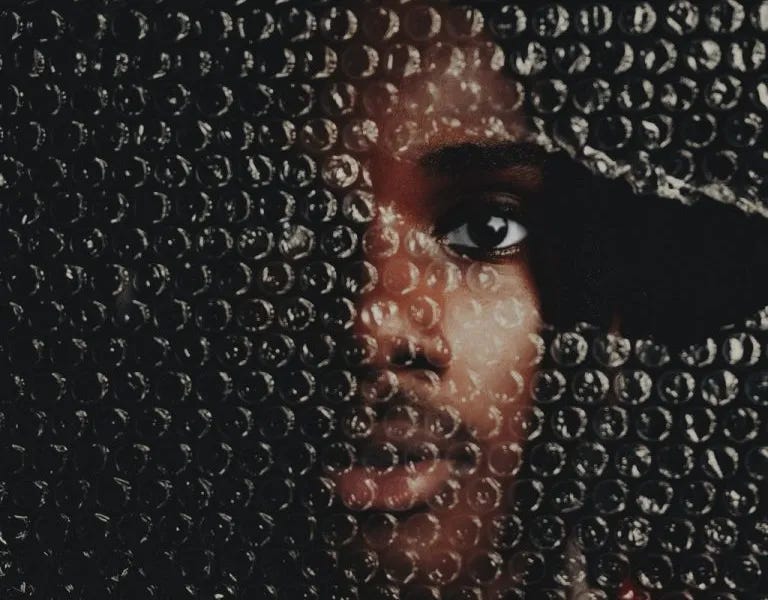
Taves’ POPSTAR cover art is one of our favorites right now. What story were you trying to tell through the artwork?
For POPSTAR, I wanted the artwork to feel like a breath of fresh air because that’s exactly how the music felt to me. There’s something youthful, fresh and unexpected about the project, and I wanted the artwork to communicate that feeling immediately. The bubble wrap became a symbol of newness, youth and uniqueness, while also giving the image a playful and tactile quality.
Have you ever changed a cover design at the very last minute? If so, what happened?
No, I’ve never done this actually.
Is there a project you've worked on that changed the way you think about creativity or design?
Most of the projects I’ve worked on keep teaching me this: that there isn’t one formula for good creative work. What works for one brand can completely fail for another. It made me understand that my job isn’t necessarily to impose my taste on everything. It’s to understand the brand, the culture and the story, and then find the strongest visual language for that particular universe.
As a creative director, how do you balance your personal artistic voice with a client's vision?
I think the key is knowing when to lead and when to listen. I definitely have my own POV, but I don’t think creative direction is about forcing your personal style onto every project. The brand usually has a story they’re trying to tell, and my job is to help them articulate that story in the strongest way possible. My voice comes through in how I interpret it, the choices I make and how I bring everything together.
What makes a great cover artwork in your opinion? Is it the visuals, the story, or the feeling it leaves behind?
I think it’s a combination of all, but if I had to choose one, it’s the feeling. Strong artworks make you want to know what’s behind the image, what the music sounds like and what world you’re about to enter.
Are there any artists, films, books, or designers that consistently inspire your work?
I’m inspired by a lot of different things, and it changes constantly. I’ve always consumed a lot of media and my work is influenced by the things I consume: music, film, photography, fashion, graphic design, architecture, even random things I see when I’m outside. I don’t really like limiting my references to specific artists, films or books. because I think that can make your work start looking too familiar.
Looking at your body of work today, is there a recurring theme or message you're unconsciously communicating?
I think there’s probably a recurring interest in identity and world-building. A lot of my work is about taking an artist or an idea and creating a world around it. I’m also really drawn to making things feel culturally specific without being overly literal. I like when you can recognise where something comes from through the details, the attitude or the environment without having to spell it out.
What's one misconception people have about being a creative director?
That being a creative director is just about having good ideas. I think that even though ideation is the primary part of the job, a big part of creative direction is knowing how to develop an idea, communicate it, make decisions, solve problems and bring a lot of different people and moving parts together to make that idea real. Sometimes the most creative part of the job is figuring out how to execute the idea when things don’t go exactly as planned.
If someone came across your work for the first time, what would you hope they take away from it?
I’d hope they feel something before they even know what they’re looking at. Curiosity, excitement, nostalgia, whatever it is. Even if someone doesn’t know the brand or the project, I want them to be able to look at it and think, “Okay, there’s a recognizable brand or world here.”
What's a creative risk you've taken recently that you're glad paid off?
Shooting through bubble wrap in real time for Taves’ cover was pretty experimental. We had originally planned to achieve the effect through 3D design, but I started thinking about what would happen if we created the distortion physically and shot through it instead as a contingency and it did the job.
Finally, what advice would you give to creatives who are struggling right now and trying to find their voice?
Don’t stop creating. I think your voice is something you discover through doing, not something you sit down and magically find. Make things, experiment, make things you hate, make things that don’t make sense, keep trying.

